


 LOGIN
LOGIN JOIN
JOIN MYPAGE
 CART
CART ORDER
ORDER SEARCH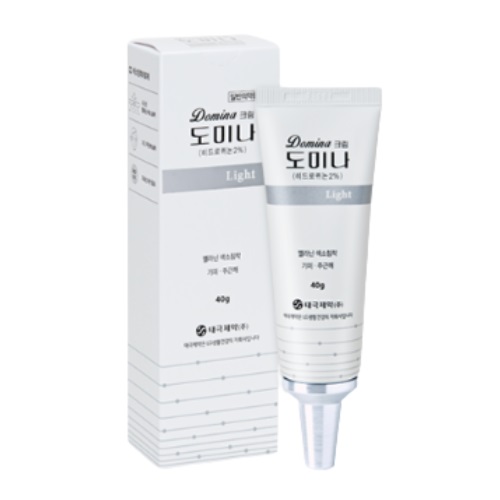
Domina Light Cream (hydroquinone 2%) 40g
Domina Light Cream 40g

Efficacy and Effects
Gradual bleaching of skin with excessive pigmentation such as: liver spots, melasma (melasma), freckles, senile black spots, and excessive melanin pigmentation in other unwanted areas.
Dosage and Administration
Apply 2% hydroquinone to the affected area 1 to 2 times daily (morning and before bedtime).
Storage Method
Store in a light-tight, airtight container in a cool, dry, dark place below 30°C.
Shelf Life
36 months from the date of manufacture.
Precautions for Use
1. Warning
1) It is of utmost importance to avoid exposure to sunlight when using this drug. Melanin production may persist even with minimal exposure to sunlight. During or after use, special care must be taken to prevent the applied area from being exposed to sunlight to protect the bleached skin and prevent recurrence; use sunscreen or wear clothing that protects from sunlight. Adverse effects, such as skin discoloration, have been reported after the applied area of this drug was exposed to sunlight. 2) Since mutagenicity and carcinogenicity caused by hydroquinone were observed in animal studies (high-dose oral administration), the duration of administration should be adjusted appropriately according to the therapeutic effect, and long-term use should be avoided.
2. Do not administer to the following patients:
1) Patients with hypersensitivity to this drug or its components, or a history of such hypersensitivity or allergic reactions.
2) Pregnant women or women who may be pregnant.
3) Children under 12 years of age.
4) Patients with renal impairment.
3. Administer with caution to the following patients:
Since it contains sodium bisulfite, it may cause allergies such as sulfite anaphylaxis, and in some susceptible patients, it may cause life-threatening or milder asthma attacks. The overall frequency of sulfite sensitivity in the general population is unknown but appears to be low, and sulfite sensitivity has been shown to be more frequent in asthmatic patients than in non-asthmatic patients.
4. Adverse Reactions
Occasionally, hypersensitivity reactions such as contact dermatitis may occur; in such cases, discontinue administration and consult a doctor or pharmacist.
5. General Precautions
1) Before using this drug, apply a small amount to the skin and observe for 24 hours to test for skin hypersensitivity. It may be used for mild redness, but do not use if itching, blisters, or excessive inflammation occur.
2) If symptoms do not improve after approximately 2 months of use, discontinue use.
3) This drug is intended only for skin discoloration and should not be used for sun protection or the prevention of sunburn.
4) Consult a doctor or pharmacist if this drug has been ingested.
6. Administration to Pregnant and Lactating Women
1) Do not administer to pregnant women or women who may be pregnant (safety has not been established).
2) Although it is unknown whether this drug is absorbed and secreted into breast milk, administer with caution to lactating women.
7. Administration to Children
Do not administer to children under 12 years of age (safety and efficacy have not been established).
8. Treatment of Overdose
Although no systemic effects resulting from the topical administration of this drug have been reported, absorption is unclear, and since some patients have experienced transient skin redness and mild burning sensations that cannot be ruled out as being related to this drug, limit the application area to a narrow range (ensure the application area does not exceed 10% of the total skin).
9. Precautions for Use
1) This drug is for external use only.
2) Avoid contact with eyes and mucous membranes.
10. Precautions for Storage and Handling
1) Keep out of reach of children.
2) Avoid transferring the contents to a different container, as this may cause accidents or is undesirable for quality preservation.
11. Other
The occurrence of tissue melanosis and colloidal milia has been reported with the chronic use (approximately 8 years) of 5% hydroquinone cream.


